

Windmill, Windmill!
An interrogation of my love for quaint towers

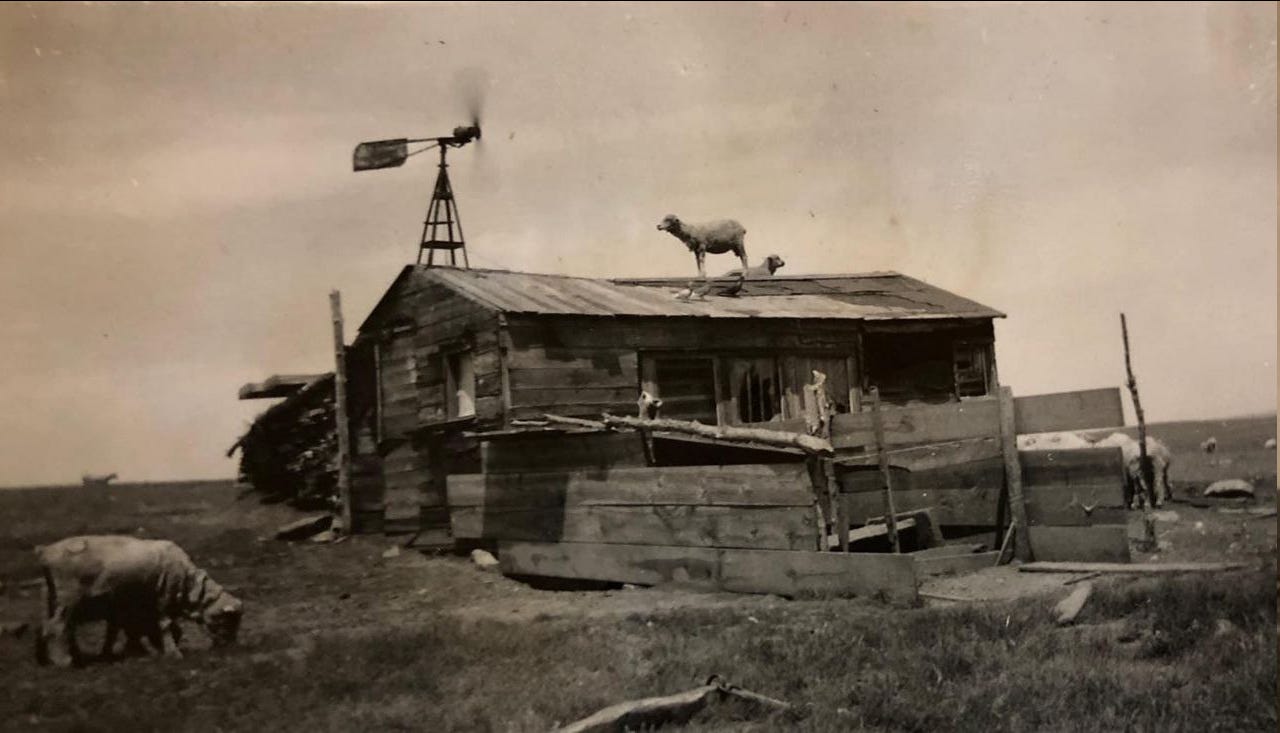
Don Quixote attacked windmills believing they were beasts, and he was not entirely wrong. Great beasts do indeed live within our infrastructures. Roads designed to encourage speeding, social media designed to isolate experience, economies designed to intensify consumption, not even only of products but of the earth itself. There are indeed terrible dragons alive in our innocent towers. Did Don Quixote know How to Blow Up a Pipeline?
But the windmills I love are not these egregores. They are not the maximally-efficient three-blade giants spinning cold and high. The windmills I love are an exploration of art and design as much as they are of the obligation to produce power. They are weird and they are wonderful. They are human-scale, made of something other than white fiberglass, hanging out in my yard or front lawn — I dream.
The windmills I think about have unconventional designs, representing promising starts and typical dead-ends. Every once in a while they attract investor monies, only to fail to make a return on that investment, and I love this. The innocence of these commercial failures is preserved by their very inefficiency. Strange little windmills demonstrate that life itself is inefficient. What exists can only exist out of the love for it.
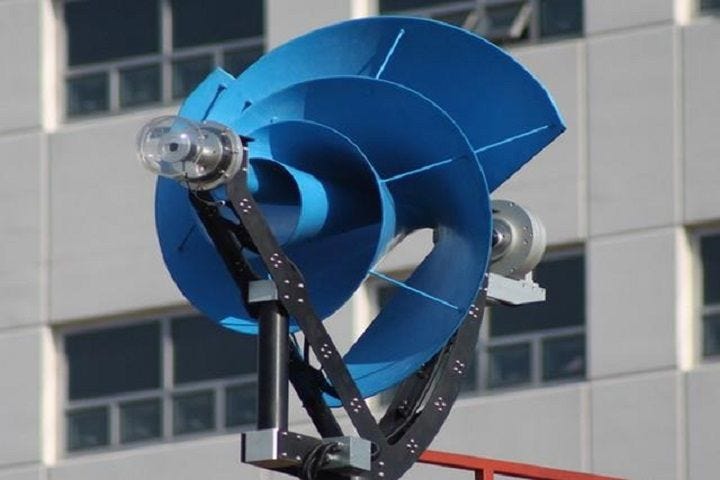
I think almost daily of little turbines, horizontal or vertical spinners and other unlikely ideas, like a balloon on a string, pulling a magnet through a tube of copper windings whenever the wind picks up, producing a few granular milliamps with each gusty pump. It’s not so strange, it’s the principle behind kite-based wind power designs, another project of anxious investors. But the romance of these strange ideas goes beyond multitude novelty for me.
The wind helps trees pump their fluids throughout their bodies, wind makes their bodies strong. Scientists tried growing trees in a windless ecosystem simulation chamber, where trees grew a little before collapsing. It turned out the lack of wind, even gentle, intermittent wind, left the trees unchallenged, their bodies atrophied, their structure too soft to sustain height. Every bit of wind a tree experiences, strong and weak, consistent and sporadic, goes to strengthening it. Every bit. Trees need to dance, too, need to fidget a little, stretch and yawn. Stillness paralyses them, and with paralysis follows atrophy.
I suppose I like little windmills because they’re dancers in the wind, too. Like the trees, and tall grass, they turn that invisible force of the air into a visible performance.
In a windmill enthusiast group on social media, I saw someone’s video of their collection of little windmills, wires and pipes between them all, many turbines no larger than my head, each twisting or spinning their own way, each trickling a little bit of power through their lines, even if all together it was practically insignificant. It was one of the messiest, most wonderful little places I’d ever seen.
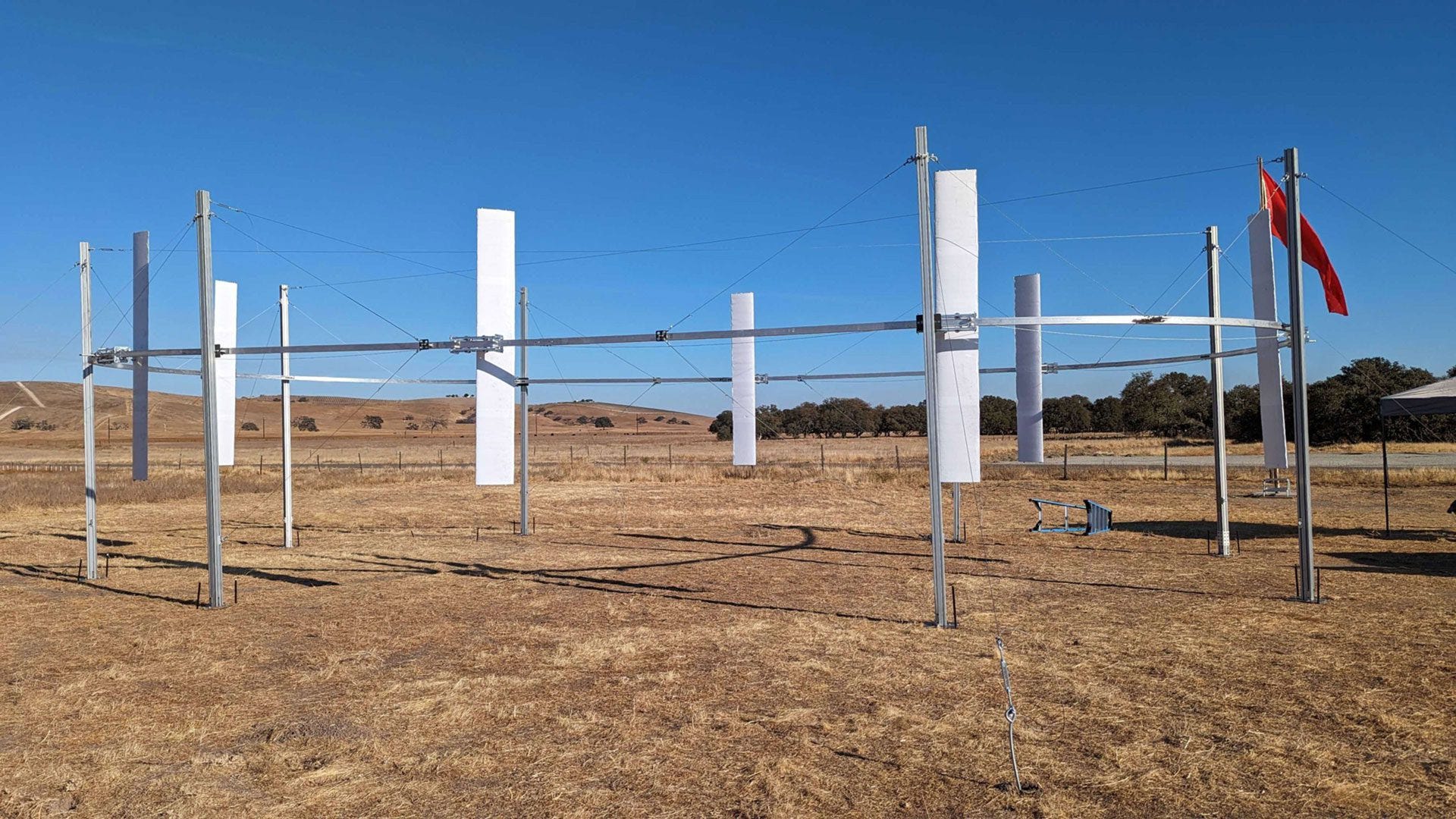
If I were a mad philosopher-king (aren’t they all), I’d buy out some remote field and build windmills, lots of silly windmills. Vertical Savonius turbines with Ugrinsky cross-sections made from discarded cans, a horizontal turbine where a wide cone of sheet steel directs air to its many small fins at its base, a turbine with spring-loaded blades that turn back at a shallower angle as the wind speeds up — and there are reasons for all these designs, but I reserve their explanations for love’s sake.
I’d also like to make a pyramid of pinwheels — yes, the childrens’ toy — each attached to a tiny DC motor-generator, just to see how much power more than a hundred of them could make under a breeze. But the measure of wattage is a formality, because what’s really produced is joy. What’s really produced is a pyramid of a hundred and twenty four pinwheels, spinning in the gusts.
I am, strangely enough, not obsessed with wind sculptures. Yes, they spin, they’re pretty, they’re well-made, but the pretense of generating useful energy, the possibility of purpose, serves a crucial role to my desire. A pure sculpture is as interesting to me as a fake plant, a plastic Christmas tree left outside in the spring.
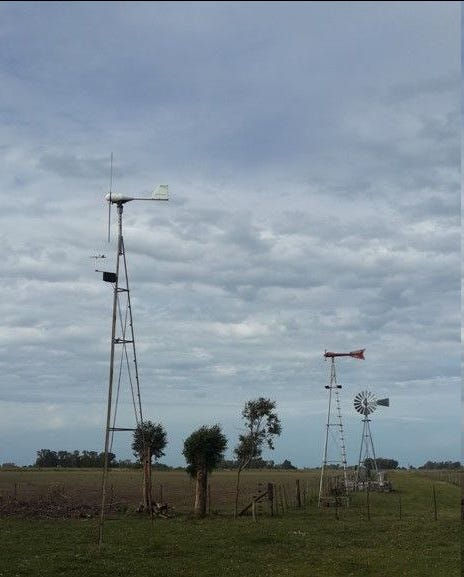
I like the idea of capturing a little bit of energy with a funny little thing. I get a kick out of accomplishing things with the silliest, quaintest strategies. Beating the serious with the absurd flips a fat switch in me. It doesn’t matter if it’s a winning strategy, it’s almost better if it isn’t. I don’t want the responsibility of a reliable approach, I want the one-time hilarity of an unorthodox upset, lightning striking the same place twice, enemies losing to a ridiculous accident beyond the anticipations of anyone’s darkest conspiracies.
I also like quantity, and ubiquity. I like lots of stupid identical things beating out a uniquely-designed, thoroughly-planned, meticulously-engineered one. I like the B1 battle droid from the Star Wars prequels. I like the Federation GM mobile suit from Gundam. I like the iconic BIC mechanical pencil, or the ever-unchanged BIC Cristal. I like the idea of a guy using the house pool cue to beat another guy with a fancy bespoke cue. I like the unbranded aluminum bats at batting centers. I like the famous 1990s Toyota Hilux, that unkillable, simple beast. I like the French Citroen 2CV, the mass-produced postwar auto with legendarily smooth suspension. I like scale, I like standardization, I like bareness. I like things that disprove the pretenses of expense.
Windchimes are the most efficient source of music. With a breeze, little bells ring. A wood ball plays a scale on pipes. One hears sunshine, even at night. The wind is the voice of the sun.
Spiders fly because of the wind. Baby spiders throw a line, the wind lifts it and they're off, hitched to a kite with no destination. There is faith in wind. Pollen carries through the wind, fruit borne by its paths. The ripples of the sea are born of wind rubbing its surface, eventually coalescing into waves.
At the seas, when warmer water meets cooler air, the water evaporates faster, lifts up the air with it. And when this happens across a large enough area with a sharp enough difference in temperature, a hurricane can form. Storms are the release of excess energy stored in seas, imparted from the sun. The oceans are the floor from which the wind springs.
I love silly windmills because I love that primordial, inefficient, silent, invisible, infrequent, and inconsistent forces might be the most vital ones. My inefficiencies, my infrequent commitments, my silence and my madness, are all alive and all precede me. They keep their trees strong, roll out their waves, clink their chimes, broadcast their baby spiders parasailing on silk threads. They turn my wheat to flour. They trickle-charge my batteries. Sometimes they deny me this entirely. I am at their mercy, I may have their grace. To trust the wind is to know faith. Every windmill is a prayer wheel.
The photo galleries over at this Wincharger enthusiast website have also been a pleasure to flip through. — Jim